Advancements in Bonus Trigger Systems for Diverse Reel Game Formats in Regulated Digital Casinos
Finley Keller · Aug 5, 2026
Advancements in Bonus Trigger Systems for Diverse Reel Game Formats in Regulated Digital Casinos
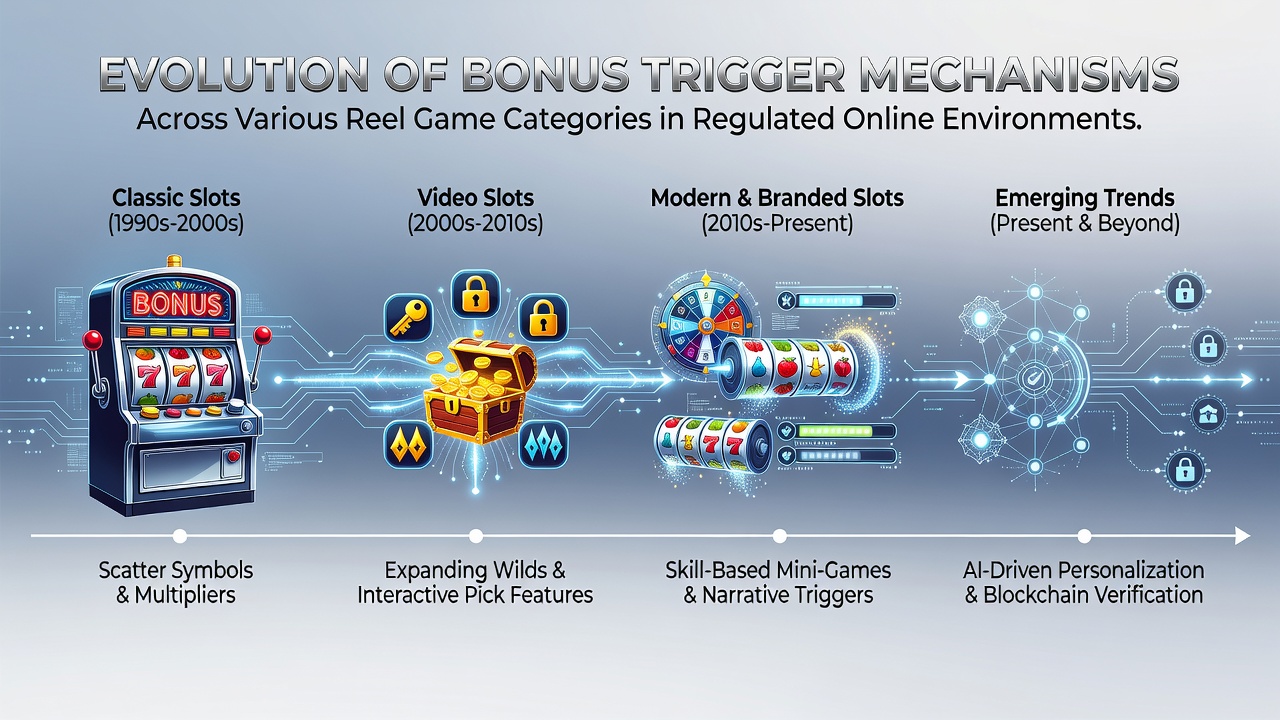
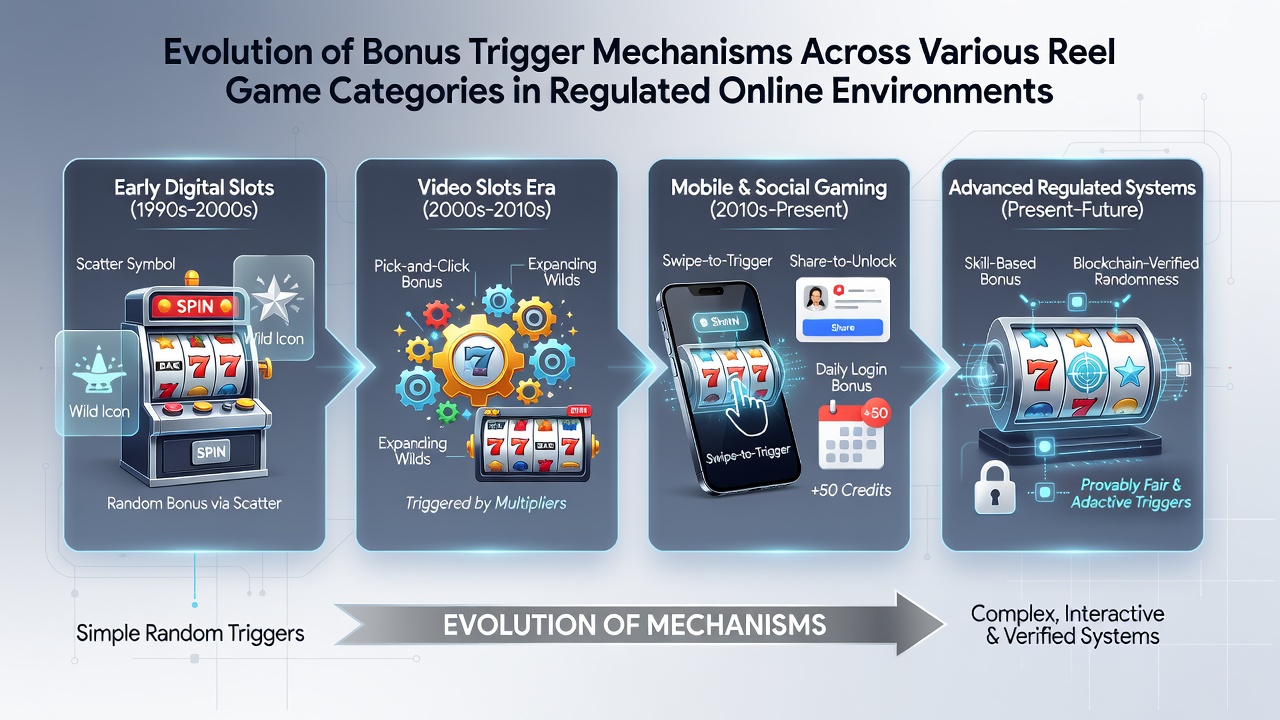
Bonus trigger mechanisms in reel games have shifted from basic symbol combinations in early digital formats to layered activation sequences that respond to player actions and random events alike, and these changes reflect both technological upgrades and stricter oversight in licensed online environments. Classic three-reel setups once relied almost exclusively on aligned jackpot symbols or single scatter icons to launch free rounds, yet five-reel video variants introduced multiple trigger layers such as expanding wilds and pick-and-click features that require specific reel positions to activate. Data from industry analyses shows that by the mid-2010s these additions expanded payout variety while maintaining compliance with random number generator standards enforced across multiple jurisdictions.
Early Foundations in Traditional Reel Categories
Three-reel and five-reel classics established the initial patterns where three matching scatters anywhere on the reels would launch a set number of free spins, and operators later refined this by adding multipliers that scaled with each retrigger. Observers note that such mechanics kept computational demands low, which suited the limited bandwidth of early online platforms, while regulators required transparent probability disclosures to prevent any perception of manipulation. Cluster-pay formats emerged next and replaced fixed paylines with adjacent symbol groups, so bonus entry now depended on collecting a threshold number of matching icons rather than linear alignments.
Expansion into Video and Megaways Structures
Video slots broadened the scope by incorporating cascading reels and accumulating symbols that build toward bonus entry over consecutive spins, and this approach increased session duration without altering core return-to-player percentages. Megaways engines took the concept further by varying reel heights on every spin, which meant trigger conditions had to account for dynamic symbol counts rather than static grids. Research indicates that these variable reel systems prompted developers to introduce collection meters and random reel modifiers as alternative entry points, ensuring bonuses remained accessible even during low-volatility stretches. In August 2026 several licensed platforms began testing hybrid triggers that combine meter collection with occasional random reel expansions, a move aligned with updated technical standards from the Malta Gaming Authority.
Regulatory Influence on Trigger Design
Licensed operators must submit detailed trigger probability models to oversight bodies before deployment, and this requirement has driven the adoption of auditable random number generators that record every potential activation path. The Nevada Gaming Control Board, for example, mandates that bonus features display clear rules on screen so players understand exactly which symbols or events initiate rounds. Similar rules appear in Canadian provincial frameworks where operators publish trigger frequency data alongside game rules, allowing independent verification that mechanics remain fair across all reel categories. These disclosures have encouraged developers to diversify trigger types, moving away from pure scatter reliance toward a mix of symbol collection, random events and progressive accumulators that still satisfy compliance checks.
Category-Specific Innovations and Case Examples
Progressive jackpot titles often layer a secondary trigger on top of standard free-spin entry, requiring players to land special jackpot symbols during base play or bonus rounds before the top prize becomes available. One documented implementation used a separate reel strip that activates only after a base-game scatter combination, which added an extra verification step without extending overall game cycle time. Cluster and grid-based games, meanwhile, have explored symbol-charging systems where repeated adjacent wins fill a meter that eventually unlocks a bonus board, and this method appears frequently in titles certified under European regulatory guidelines. Observers have tracked how such layered activations maintain mathematical balance while giving players visible progress indicators that comply with transparency mandates.
Current Trends and Technical Integration
Integration with player-account systems now allows some regulated platforms to adjust trigger sensitivity based on session history, though all adjustments remain within pre-approved ranges set by licensing authorities. Mobile optimization has also influenced design, pushing developers toward touch-friendly bonus entry animations that load quickly on varying connection speeds. Figures released by the Australian Communications and Media Authority reveal steady growth in certified games that employ multiple simultaneous trigger conditions, reflecting both player preference data and the need for robust compliance logging. These developments continue to shape how reel categories differentiate themselves while operating inside shared regulatory boundaries.
Conclusion
The trajectory of bonus trigger mechanisms demonstrates consistent adaptation to technological capacity and regulatory demands across reel game categories, with each advancement preserving fairness metrics while expanding activation variety. Licensed environments continue to require verifiable probability models and clear on-screen information, which in turn guides developers toward hybrid systems that combine traditional scatters, collection meters and random modifiers. Ongoing certification processes ensure these features remain consistent regardless of platform or jurisdiction, supporting stable player experiences within established legal frameworks.