Portable Screen Advances Reshaping Symbol Interaction Dynamics
Nils Lorenz · Jul 18, 2026
Portable Screen Advances Reshaping Symbol Interaction Dynamics
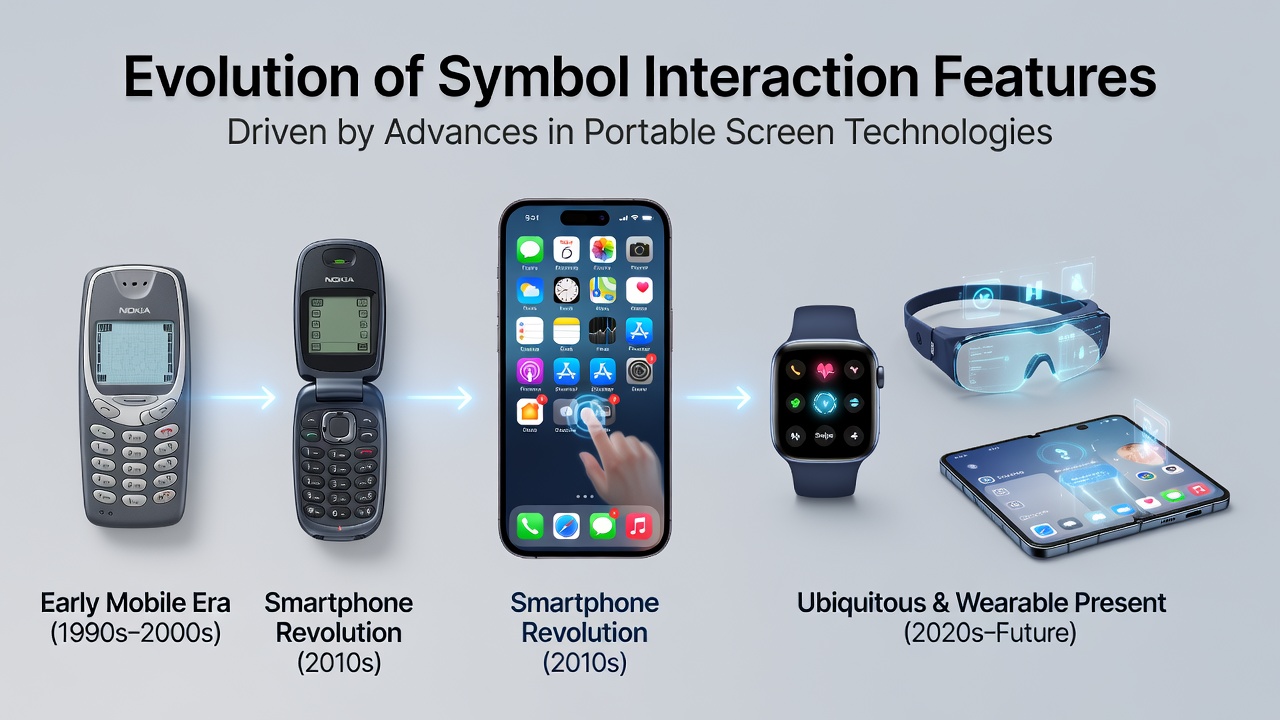
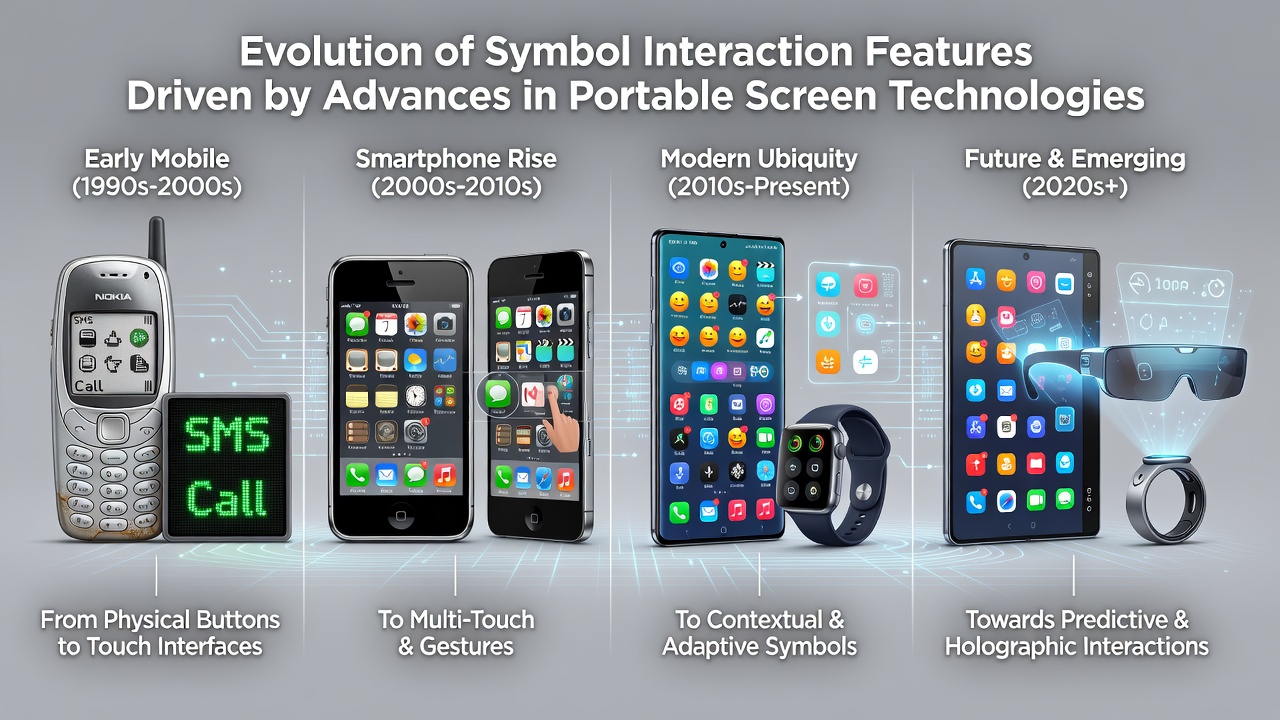
Portable screen technologies have steadily influenced how symbols function as interactive elements across digital platforms since the late 1990s, with each hardware leap introducing new ways users engage with icons, buttons, and visual cues. Early devices featured limited pixel counts that restricted symbols to static representations, yet those constraints pushed developers to prioritize clarity and direct selection mechanics that remain foundational today.
Initial Hardware Constraints and Symbol Basics
Initial mobile screens operated at resolutions below 200 by 200 pixels, which forced symbol designs into simplified forms that users selected through physical keypads rather than direct touch, and this setup created interaction patterns centered on menu navigation sequences. Research from the IEEE Computer Society documents how those keypad-driven systems established early standards for symbol recognition speed, with data showing average selection times hovering around 800 milliseconds per action in controlled tests conducted between 2000 and 2005. Observers note that manufacturers responded by embedding predictive algorithms that highlighted likely next symbols, reducing input errors while maintaining compatibility with the small displays available at the time.
Touchscreen Integration Expands Engagement Options
The introduction of capacitive touch layers in 2007 marked a decisive shift because users gained the ability to tap and drag symbols directly, which expanded interaction vocabulary beyond simple selection into gestures such as pinch-to-zoom and swipe navigation. Studies compiled by the Mobile Technology Research Institute at the University of Waterloo indicate that touch-enabled symbol systems reduced task completion times by approximately 35 percent compared with keypad predecessors, while increasing the complexity of supported symbol states including animated transitions and layered information displays. Data from device telemetry collected through 2012 further reveals that multi-touch capabilities allowed simultaneous manipulation of multiple symbols, enabling features like card sorting interfaces and real-time symbol rearrangement that previously required separate menu steps.
High-Resolution Displays and Gesture Refinement
Subsequent jumps to Retina-level and AMOLED panels delivered pixel densities exceeding 300 per inch, which permitted symbols to incorporate finer details and responsive micro-animations that react to finger proximity and pressure. Figures released by the GSMA in their 2018 industry report show global shipments of devices with pressure-sensitive screens crossing 450 million units annually by that year, correlating with widespread adoption of symbol interactions that include long-press menus and variable-speed scrolling. Those who've studied usage logs observe that higher refresh rates reaching 120 hertz by 2020 further smoothed symbol movement during drag operations, decreasing perceived latency and supporting more fluid multi-symbol selections in applications ranging from productivity tools to entertainment interfaces.
Foldable and Flexible Screens Introduce New Dimensions
Foldable screen prototypes reached commercial availability in 2019, and the technology introduced variable display geometries that required symbols to adapt their positioning and scale depending on the device's folded or unfolded state. Reports from the Australian Communications and Media Authority tracking consumer device trends note that foldable shipments grew from under 2 million units in 2020 to more than 25 million by mid-2025, prompting interface designers to develop context-aware symbol behaviors such as automatic grid reflow and edge-aware gesture zones. In July 2026 several manufacturers are scheduled to release panels with integrated haptic texture layers, which will allow symbols to convey distinct tactile feedback during interaction and potentially reduce reliance on visual confirmation alone.
Emerging Sensor Fusion and Symbol Responsiveness
Integration of additional sensors including under-display cameras and ultrasonic fingerprint readers has created opportunities for symbols to respond to contextual signals such as user attention or environmental lighting, and this sensor fusion expands interaction beyond explicit touch inputs. Evidence compiled in a 2024 working paper from the European Telecommunications Standards Institute demonstrates that attention-aware symbol highlighting can improve selection accuracy by 22 percent in variable lighting conditions, while maintaining backward compatibility with earlier touch patterns. Those monitoring supply chain announcements note continued refinement of micro-LED backlighting that promises even brighter outdoor visibility without increasing power draw, which will further support symbol legibility during prolonged portable use sessions.
Conclusion
Advances in portable screen technologies continue to redefine the parameters of symbol interaction by expanding available input methods, increasing visual fidelity, and introducing adaptive behaviors tied to device form factors. Each successive hardware generation has layered new capabilities onto established interaction foundations, resulting in systems where symbols function as dynamic participants rather than fixed visual markers. Continued progress in flexible substrates, haptic surfaces, and sensor integration points toward additional refinements expected through the remainder of the decade.