Volatility Versus RTP: Core Dynamics Shaping UK Slot Payouts
Dana Becker · Apr 4, 2026
Volatility Versus RTP: Core Dynamics Shaping UK Slot Payouts
Breaking Down RTP in the Slot World
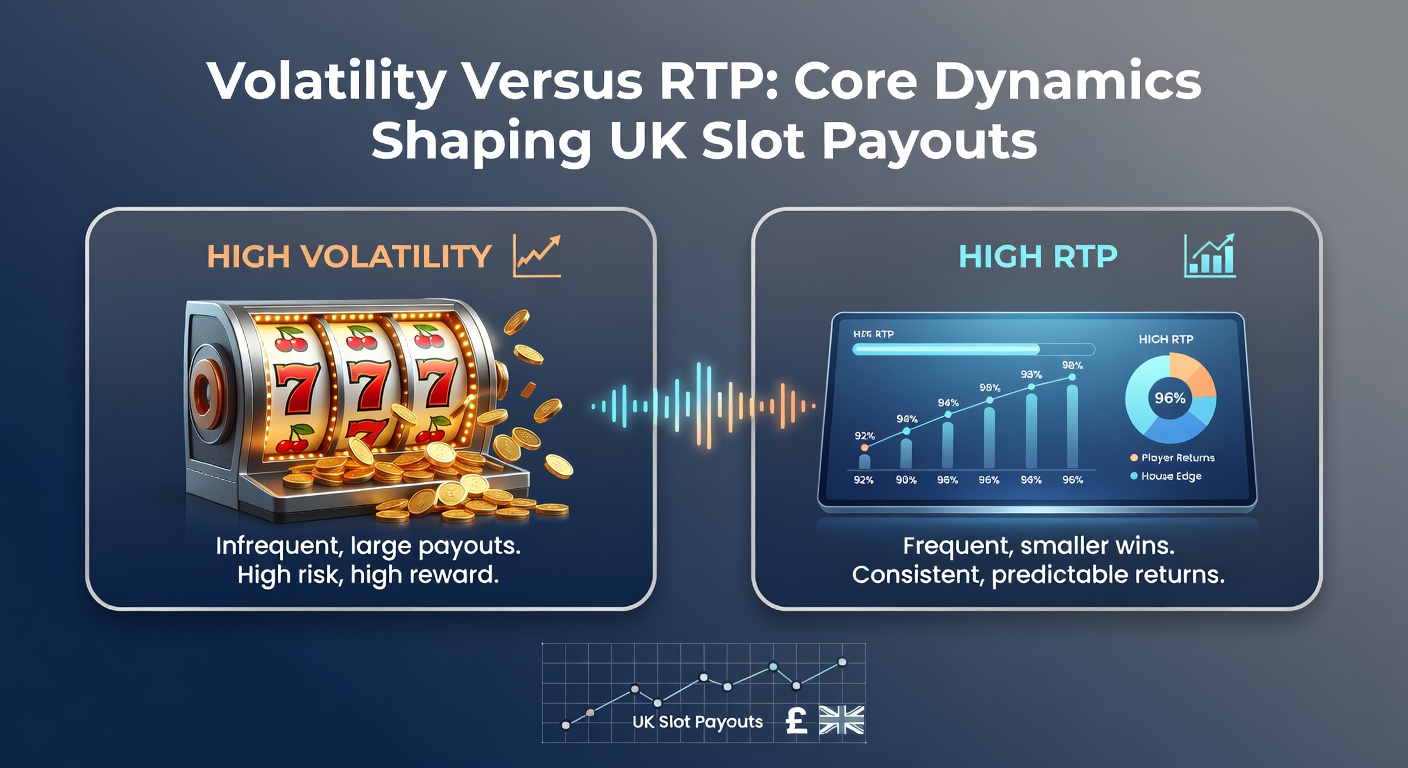
Return to Player, or RTP, stands as the cornerstone metric for slot payouts; it represents the percentage of wagered money a slot machine returns to players over an extended period, often calculated across millions of spins. Developers embed RTP directly into game math models, ensuring theoretical long-term payouts hover between 85% and 98% for most titles available in the UK market, while regulators verify these figures through independent audits. Data from the Nevada Gaming Control Board reveals average RTPs for licensed slots typically cluster around 92-96%, a benchmark that influences UK offerings since many games originate from the same international providers.
What's interesting here involves how RTP unfolds over time; short sessions might yield wildly different results because this metric shines brightest in massive sample sizes, say tens of thousands of plays, yet players encounter it in bursts of dozens or hundreds of spins. Take one popular UK slot like Starburst, where RTP sits at 96.09%, meaning for every £100 wagered collectively, £96.09 returns on average; but individual runs can swing dramatically, underscoring why RTP alone doesn't predict session outcomes. Researchers at the University of Sydney, in a 2023 study on electronic gaming machines, found RTP consistency holds firm only after 100,000+ spins, a reality that shapes player expectations across UK platforms.
And then there's the certification process; testing labs like eCOGRA run simulations to confirm RTP accuracy, publishing reports that UK sites reference in their game info sections, although actual payouts depend on random number generators ensuring fairness spin by spin.
Unpacking Slot Volatility: The Wild Card Factor
Volatility, sometimes called variance, measures payout frequency and size; low-volatility slots dish out smaller, more regular wins, keeping balances steady through frequent hits, whereas high-volatility ones build tension with rarer but potentially massive payouts that can transform a session. Figures from the Alcohol and Gaming Commission of Ontario indicate low-volatility games average wins every 3-5 spins at modest multiples, while high-volatility counterparts might go 50-100 spins dry before unleashing bonuses worth 500x or more the stake.
Observers note how developers label volatility subtly, often through paytable structures or marketing hints, since UK regulations require transparency without mandating explicit tags; players learn by observing win rates during demo play. Consider Gonzo's Quest Megaways, a medium-high volatility title where cascades trigger modestly often, but multipliers climb exponentially in free falls, leading to those memorable big hits that define the mechanic. Studies from the Australian Government Department of Social Services highlight how high-volatility designs spike player excitement, although they also amplify risk, with dry spells testing bankrolls before the payoff arrives.
But here's the thing: volatility directly impacts session length and thrill; low-volatility suits casual play with steady drips of returns aligning closer to RTP early on, while high-volatility demands deeper pockets, as evidenced by player tracking data showing average session times double on volatile games before hitting peaks.
Where RTP and Volatility Collide: Real-World Dynamics
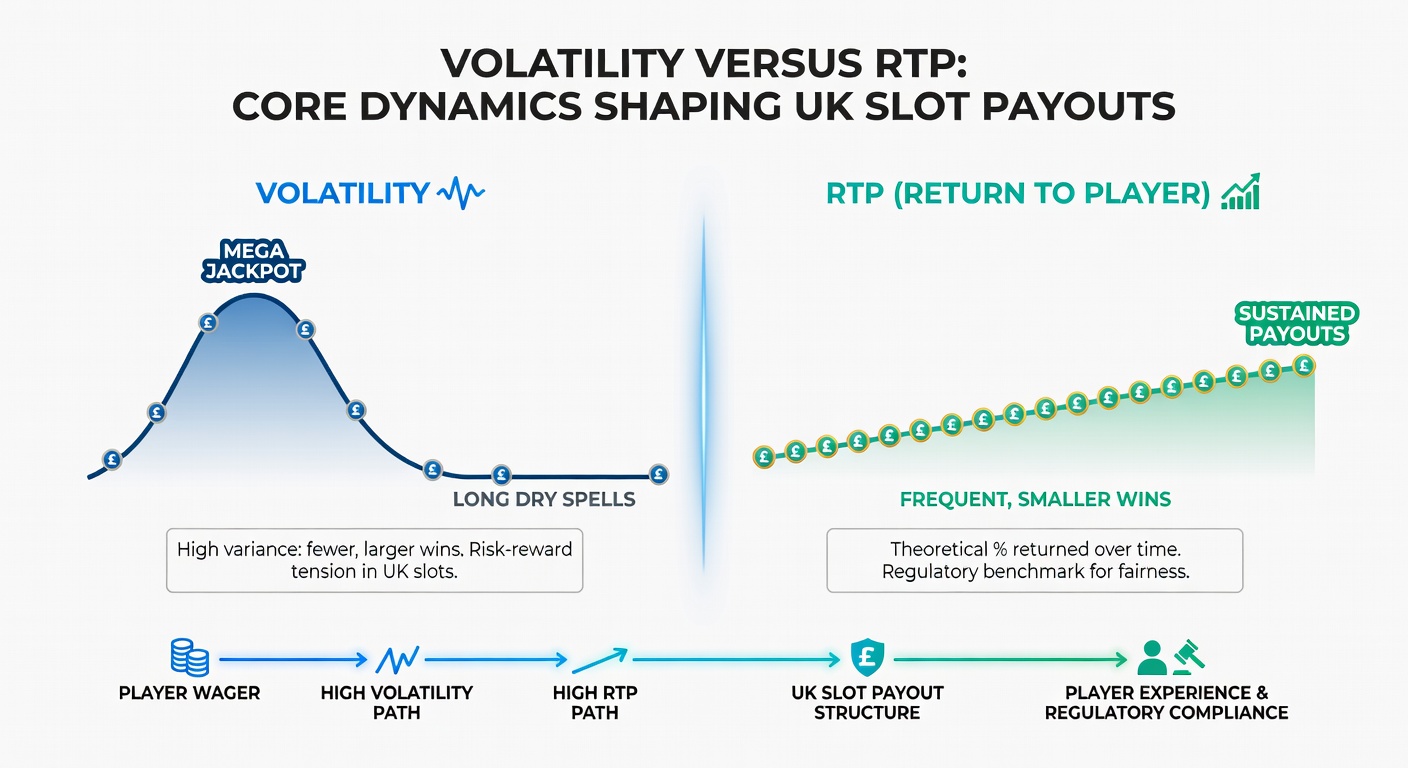
RTP sets the overall payout ceiling, but volatility dictates the path to get there; a 96% RTP low-volatility slot delivers frequent small wins approximating that figure quickly, smoothing the ride, whereas the same RTP in a high-volatility format clusters payouts in explosive bursts after prolonged lulls, creating boom-or-bust cycles. Data indicates this interplay explains why two slots with identical RTPs feel entirely different; experts analyzing provider portfolios, such as NetEnt's range, observe low-volatility Book of Dead variants pay steadily on base game scatters, while high-volatility siblings hoard wins for expanding symbol free spins that can eclipse 10,000x bets.
Turns out, as of April 2026, UK platforms increasingly highlight these dynamics in game lobbies, with filters for volatility preferences emerging amid player feedback; recent reports from the European Casino Association note a 15% uptick in medium-volatility titles, balancing accessibility with jackpot potential. One case study from Pragmatic Play's Sweet Bonanza shows 96.48% RTP paired with high volatility, where tumble wins build multipliers up to 100x, but base game hits occur roughly every fourth spin, per lab-tested simulations.
People who've tracked thousands of sessions often discover volatility trumps RTP for short-term strategy; low-volatility choices extend playtime on modest budgets, aligning wins closer to expected value sooner, although high-volatility games dominate progressive jackpot chases, where rare triggers unlock life-changing sums despite the grind.
UK Market Nuances: Regulations and Provider Trends
In the UK, slot dynamics adhere to stringent fairness standards, with RTPs locked post-certification and volatility baked into core math; operators display RTP ranges for lobbies, often 94-97%, while individual games list exact figures in help menus. Providers like Play'n GO and Big Time Gaming tailor volatility for UK audiences, favoring medium-high profiles that comply with stake caps introduced in recent years, ensuring sustainable play amid evolving protections.
What's significant involves April 2026 updates, where industry shifts toward clearer volatility indicators appear in major site redesigns, driven by player demand for upfront info; data from iGaming Business reports show 68% of UK players now prioritize volatility filters, influencing how sites curate top lists. Take Dead or Alive 2, a high-volatility staple at 96.82% RTP, notorious for 100-spin droughts punctuated by 100,000x max wins, a pattern lab tests confirm across millions of iterations.
Yet developers innovate within bounds; cluster pays in Aloha! Cluster Pays (low-medium volatility, 96.42% RTP) deliver frequent partial matches, contrasting sticky wilds in high-volatility releases that demand perfect setups for payouts. Observers tracking provider output note a trend: UK-focused slots lean medium volatility for broader appeal, as low-end feels too predictable and high-end too punishing under session limits.
Practical Examples: Slots in Action
Low-volatility shines in titles like Blood Suckers, boasting 98% RTP with wins every 2-3 spins via pick bonuses and free spins that rarely exceed 500x, ideal for grinding returns steadily. Medium-volatility, as in Reactoonz, blends 96.51% RTP with cluster clears building meters for super symbols, where sessions average 20-50x buy-ins over 200 spins, per player aggregate data.
High-volatility examples dominate headlines; Money Train 3 hits 96.10% RTP but thrives on global multipliers up to 50,000x during bonus buys, with dry spells common before resale features kick in. And here's where it gets interesting: combining volatility awareness with RTP scouting lets players match styles to bankrolls; those favoring steady action pick low-volatility for marathon sessions, while jackpot hunters endure high-volatility variance for the slim shot at enormity.
Case in point, a 2025 analysis by Habanero revealed their high-volatility Hot Hot Fruit at 96.75% RTP averages one major hit per 250 spins, but those hits average 1,200x stakes, balancing the math while fueling the chase.
Strategies Shaped by These Core Forces
Players navigate by blending metrics; starting with RTP floors above 95% narrows options, then volatility aligns with risk tolerance, since low suits £10-50 sessions and high demands £200+ reserves for 100-spin endurance. Demo modes reveal patterns firsthand, with hit frequencies listed in many UK games allowing pre-play assessment.
So, bankroll management ties directly in; data shows low-volatility slots sustain 300+ spins on 100x unit bets, while high-volatility halves that, emphasizing unit sizing. Bonuses amplify dynamics too, as free spins on high-volatility retriggers extend droughts or ignite jackpots unpredictably.
It's noteworthy that as April 2026 progresses, mobile apps integrate volatility meters, helping users toggle preferences mid-lobby, a nod to data-driven personalization sweeping UK sites.
Conclusion: Mastering the Balance for Smarter Play
Volatility and RTP together orchestrate every slot's payout rhythm, with RTP anchoring long-term fairness and volatility sculpting the journey's peaks and valleys; UK players benefit from transparent metrics, certified math, and evolving tools that demystify choices. Data underscores matching volatility to style maximizes enjoyment without chasing illusions, as millions of spins affirm these dynamics hold true across providers and platforms. Those who grasp this interplay often find sessions more predictable, turning random spins into informed pursuits amid the ever-shifting landscape of UK slot offerings.